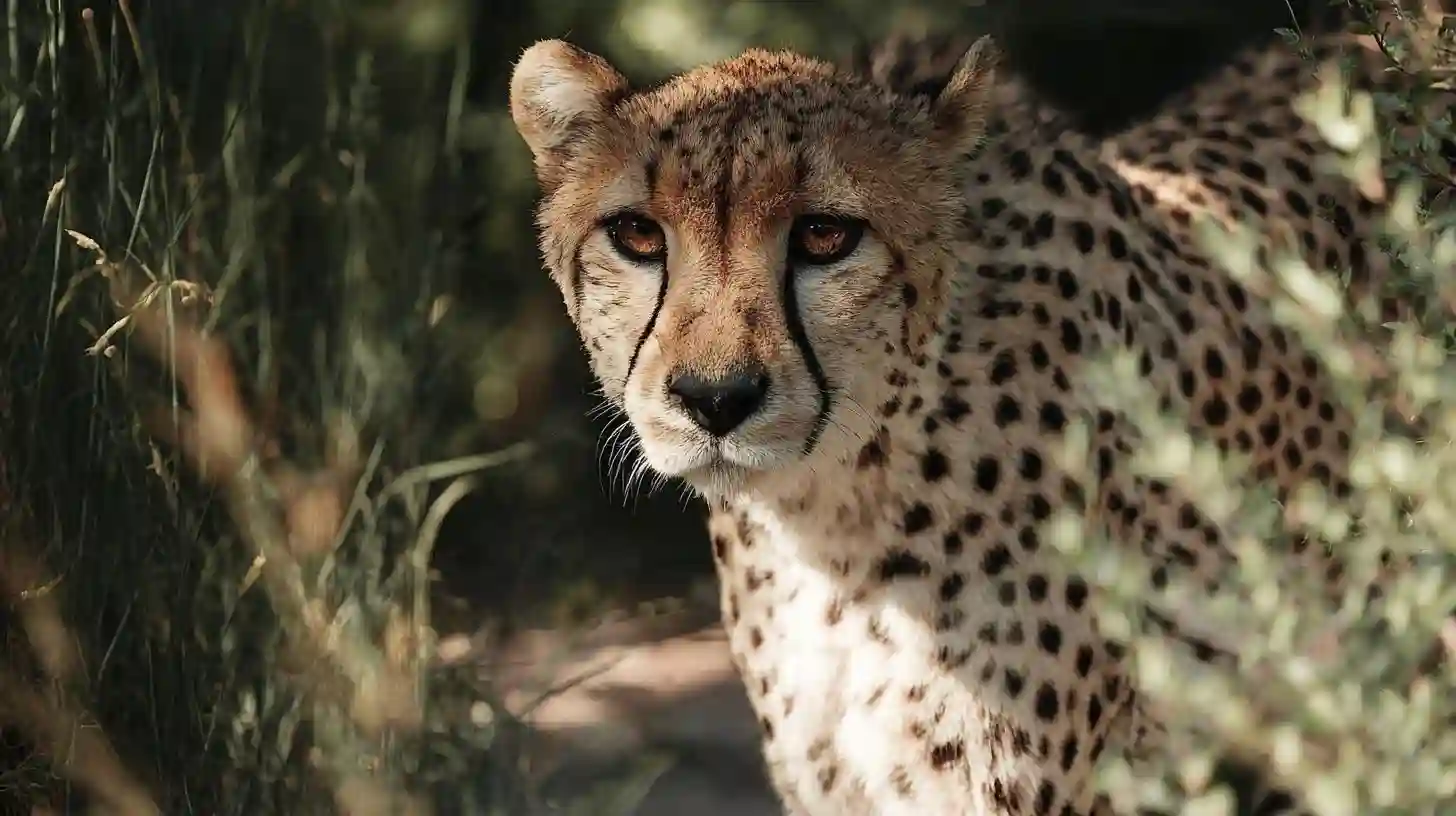
Cheetahs are widely recognized as the fastest land animals on Earth, with an ability to accelerate at remarkable speeds that can leave other creatures in their wake. Their extraordinary speed is a result of both their evolutionary adaptations and specialized physical characteristics, making them unparalleled hunters in the wild. Unlike many animals that rely on endurance to capture prey, cheetahs rely on short bursts of speed to chase down their targets, making them formidable predators in the African savannas and parts of Asia.
The cheetah's body is designed with speed in mind. Its slender, aerodynamic build allows it to cut through the air with minimal resistance. The long, flexible spine plays a pivotal role in their running ability, allowing for a stretch-and-snap motion that propels the cheetah forward during high-speed chases. The powerful muscles in the cheetah’s hind legs provide the necessary strength for explosive bursts, and the claws, which are not retractable like those of other cats, offer better traction when accelerating. Its small collarbone and wide chest also help to maintain flexibility while running.
Cheetahs are built for the sprint, not the marathon. Their acceleration capabilities are truly exceptional, allowing them to reach speeds that exceed most cars in urban areas. In the span of a few seconds, a cheetah can go from zero to its top speed, typically in under three seconds. This speed, however, comes with a trade-off. Cheetahs can only sustain their top velocity for short distances, usually no more than a few hundred meters. Beyond this, they risk overheating due to their high metabolic rate, which is why they often rely on surprise and strategy when hunting to ensure a successful capture.
Their hunting technique is equally specialized, as they often employ a combination of stealth and sprinting to close the distance between themselves and their prey. Cheetahs begin by stalking their target, making sure to stay hidden until they are within striking range. Once they launch their chase, their bodies are fine-tuned for rapid acceleration. Unlike other predators that rely on stamina to chase down prey over long distances, the cheetah's sprint is a high-intensity burst meant to surprise its target and make the kill in a matter of seconds. The cheetah's eyesight is also exceptional, with a keen ability to spot prey from a distance, which gives it a significant advantage in the wild.
The cheetah's ability to reach such remarkable speeds requires a finely tuned cardiovascular system. Its heart and lungs work in tandem to supply the muscles with oxygen during the sprint, and the cheetah's circulatory system is equipped to rapidly dissipate heat. However, after a chase, the cheetah needs time to recover. They often rest in the shade to cool down after a high-speed chase, as their body temperature can rise quickly during intense activity.
Cheetah cubs, like other members of the animal kingdom, undergo a lengthy period of learning before they can become proficient hunters. They must learn how to stalk and judge the distance to their prey. As they grow, they develop the speed and agility needed to take down smaller animals before gradually progressing to larger game. Despite their speed, cheetahs face threats from other animals and human activities. Lions and hyenas are known to steal their kills, and their populations are threatened by habitat loss, poaching, and the illegal wildlife trade.
The cheetah’s unique combination of speed, agility, and specialized anatomy has allowed it to carve out a niche as one of nature's most extraordinary hunters. Yet, despite their remarkable abilities, they remain vulnerable in the wild due to various environmental pressures. Conservation efforts are vital to ensuring that future generations of cheetahs continue to roam the Earth, hunting and displaying their incredible abilities. Their role in maintaining the ecological balance of their habitats underscores their importance, not only as a symbol of nature's speed but also as a key player in the delicate web of life.