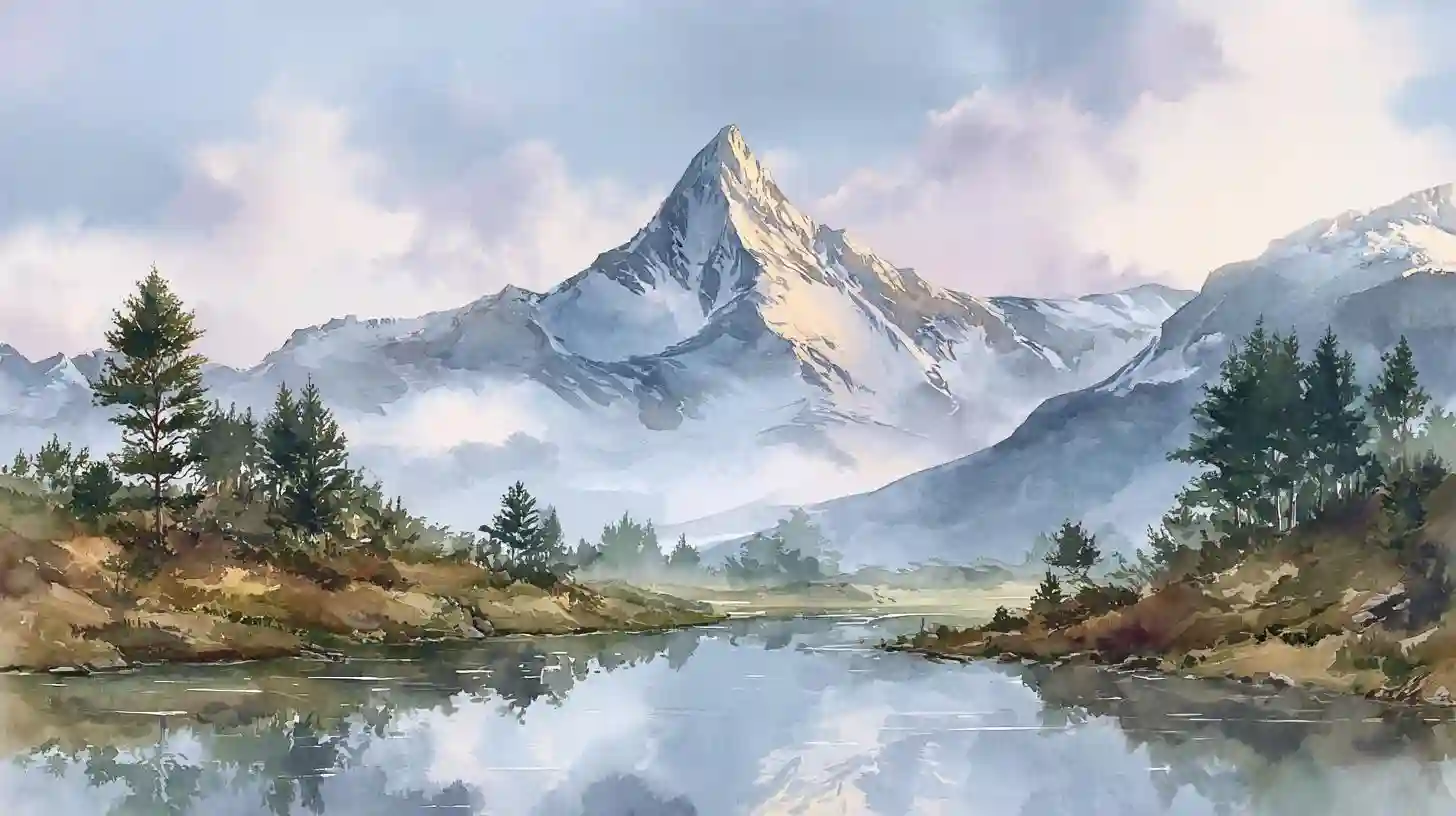
Watercolor painting is a popular and versatile medium that allows artists to create stunning landscapes. The beauty of watercolor lies in its ability to capture the delicate play of light and color in a way that other mediums cannot. Painting landscapes with watercolor requires both technical skill and an understanding of how to manipulate the paint and water to achieve the desired effects. Whether you're painting a peaceful forest, a dramatic mountain range, or a serene beach scene, mastering watercolor techniques can help you bring your vision to life.
To begin with, it's essential to understand the basic tools needed for painting landscapes in watercolor. The most important tools are the watercolor paints themselves, which come in tubes or pans. Tubes offer a more intense pigment, while pans are more portable and convenient. Artists typically choose a range of colors that include a variety of hues for skies, trees, and other natural elements. Brushes are another key component. Watercolor brushes are designed to hold a large amount of water, which is essential for achieving the smooth, fluid washes that are characteristic of the medium. A round brush is often used for fine details and small areas, while a flat brush is useful for larger washes and broad strokes.
Before starting your landscape painting, it's important to prepare your paper. Watercolor paper is typically thicker than regular paper to prevent it from warping when wet. The texture of the paper also plays a crucial role in the final result. Rough paper has a more textured surface, which can create interesting effects in the paint, while hot-pressed paper is smooth and provides a more even finish. Cold-pressed paper, the most common choice, has a subtle texture that allows for both smooth and textured effects.
Once your materials are ready, you can begin planning your landscape. One of the key aspects of painting landscapes is understanding the composition of the scene. The placement of elements like mountains, trees, water, and the sky should be thoughtfully considered to create balance and depth. It’s helpful to sketch the basic outline of the scene with a light pencil before applying paint. This allows you to adjust the composition as needed without the paint getting in the way. Keep in mind that watercolor paintings often have an ethereal, loose quality, so don’t feel pressured to create a hyper-detailed sketch.
When it comes to applying the paint, one of the most important techniques to master is the wash. A wash is a thin layer of watercolor paint applied to the paper. You can use different types of washes to create varying effects. A flat wash involves applying an even layer of paint across the entire area, while a graded wash transitions from a darker to lighter color. This technique is ideal for painting skies, oceans, and distant mountains. To create a smooth gradient, it's crucial to control the amount of water on your brush and paper, as this will determine how smoothly the paint transitions.
Another technique that is essential in landscape painting is wet-on-wet. This technique involves applying wet paint onto a wet surface, which allows the colors to blend and flow into one another. Wet-on-wet is ideal for creating soft, atmospheric effects, such as mist or clouds. For example, you might use this technique to paint a sky that gradually transitions from blue to a soft, misty horizon. The key is to work quickly and make sure the paper is sufficiently wet before applying the paint. The paint will spread and blend in unpredictable ways, which is part of the charm of this technique.
Dry brush is another valuable technique that can help add texture to your landscape. This involves using a dry brush with minimal water to apply pigment to the paper. It is especially useful for painting small details like tree branches, rocks, or grass. By controlling the amount of paint on the brush, you can create fine lines and textures that add realism to your landscape. Dry brush strokes can also be used to highlight areas of contrast or add depth to the painting.
When painting specific elements of the landscape, it’s important to consider how light interacts with the scene. The way light hits objects like trees, rocks, and water can significantly influence the color choices and technique. For example, painting sunlight on water requires careful attention to the reflection and the ripples on the surface. It’s often helpful to leave areas of the paper blank to allow for the white of the paper to shine through, creating a natural highlight. For shadows, watercolor artists often use complementary colors or darker versions of the colors in the scene to suggest depth and form.
Adding final details to your landscape can help bring the painting to life. Small touches, such as adding birds in the sky, distant trees, or highlights on water, can make the difference between a good painting and a great one. However, it's important to know when to stop. Watercolor painting is often about the process of building layers and letting the paint work its magic, so resist the urge to overwork the painting. By allowing areas to remain soft and flowing, you can preserve the light, airy quality that is unique to watercolor landscapes.
With practice, you will develop your own style and techniques for painting beautiful watercolor landscapes. The beauty of watercolor lies in its spontaneity and unpredictability, and the more you experiment, the more you will learn about how the medium behaves. Keep experimenting with different techniques, and don't be afraid to make mistakes. Each painting is an opportunity to grow and improve as an artist. Whether you prefer vibrant, detailed landscapes or soft, atmospheric scenes, watercolor offers endless possibilities to create stunning works of art.