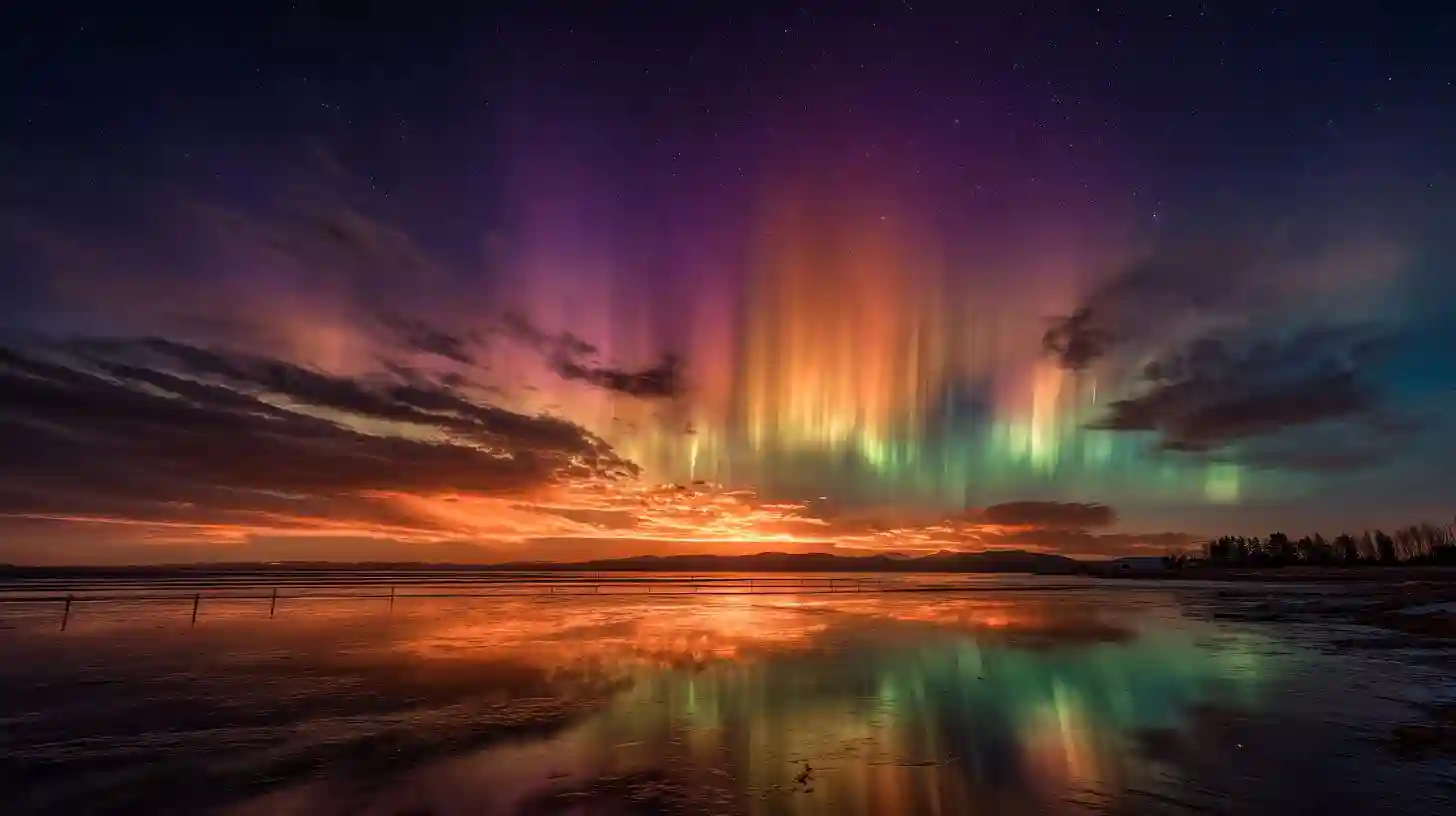
The night sky is transformed into an awe-inspiring spectacle, a canvas painted by nature itself. In the far reaches of the polar regions, the aurora borealis, or northern lights, unfurls its magical dance across the heavens. With a vibrant mix of greens, pinks, and purples swirling in mesmerizing patterns, it seems as though the sky has been touched by a divine hand, weaving a story of light that captivates all who are fortunate enough to witness it.
The aurora is a natural light display caused by charged particles from the sun colliding with the Earth’s magnetic field. As these particles interact with the atmosphere, they emit light in varying colors. The phenomenon is often associated with the polar regions, where the Earth's magnetic field is strongest, but it can also be observed at lower latitudes during particularly strong solar storms. The display is not just a visual wonder; it is a reminder of the incredible forces that shape our planet and its atmosphere.
Watching an aurora is a deeply personal experience. As the colors shift and change in the sky, viewers can feel a sense of connection with the vastness of the universe. The movement of the lights is often slow and graceful, like the gentle ripples of a calm sea or the soft flutter of a bird’s wings. The way the colors pulse and fade, merging and separating in an endless flow, evokes a feeling of timelessness. It is as if time itself stands still, allowing those who watch to be fully immersed in the moment.
The best places to witness this natural marvel are in the Arctic and Antarctic regions, where the lights are visible on the clearest of nights. However, the aurora is not bound to the poles alone. In recent years, displays have been seen in regions further south, as the Earth’s magnetic field fluctuates with the activity of the sun. These displays can last for hours, providing ample time for those who venture into the night to take in the full grandeur of the show. As the lights dance across the sky, they seem to have a life of their own, twisting and turning in a way that feels almost conscious, as if they are aware of the audience below.
The colors of the aurora vary depending on the type of gas the solar particles are interacting with. Oxygen at high altitudes produces the green and yellow hues that are most commonly associated with the aurora. At lower altitudes, nitrogen can emit reds, purples, and pinks, adding to the array of colors in the sky. The sheer diversity of tones, often layered one on top of the other, creates an effect that is as though the heavens themselves are alive with movement.
The cultural significance of the aurora is profound. For centuries, indigenous peoples in the Arctic regions have had their own interpretations of the lights. In many cultures, the aurora was seen as a spiritual sign or a reflection of the gods’ emotions. Some believed that the lights were the spirits of their ancestors, dancing in the sky, while others saw them as the flickering flames of great fires. Today, the aurora continues to inspire awe and wonder in people of all backgrounds, regardless of culture or belief.
For many, the aurora is a bucket-list experience. People travel from all over the world to see it in person, often journeying to remote, cold locations where the lights are most visible. But there is something about seeing the aurora in its natural habitat, untouched by the noise and distractions of modern life, that makes the experience even more profound. It is a reminder of the beauty that exists beyond our busy world, and the quiet majesty of nature’s wonders.
The aurora is not just a visual display; it is a reminder of the powerful connection between the Earth and the cosmos. It is a testament to the forces that shape our planet, and a reminder that even in the most remote corners of the world, there is beauty beyond comprehension. Watching the aurora is a humbling experience, one that connects us to something greater than ourselves, and fills us with a sense of wonder that lingers long after the lights have faded from the sky.