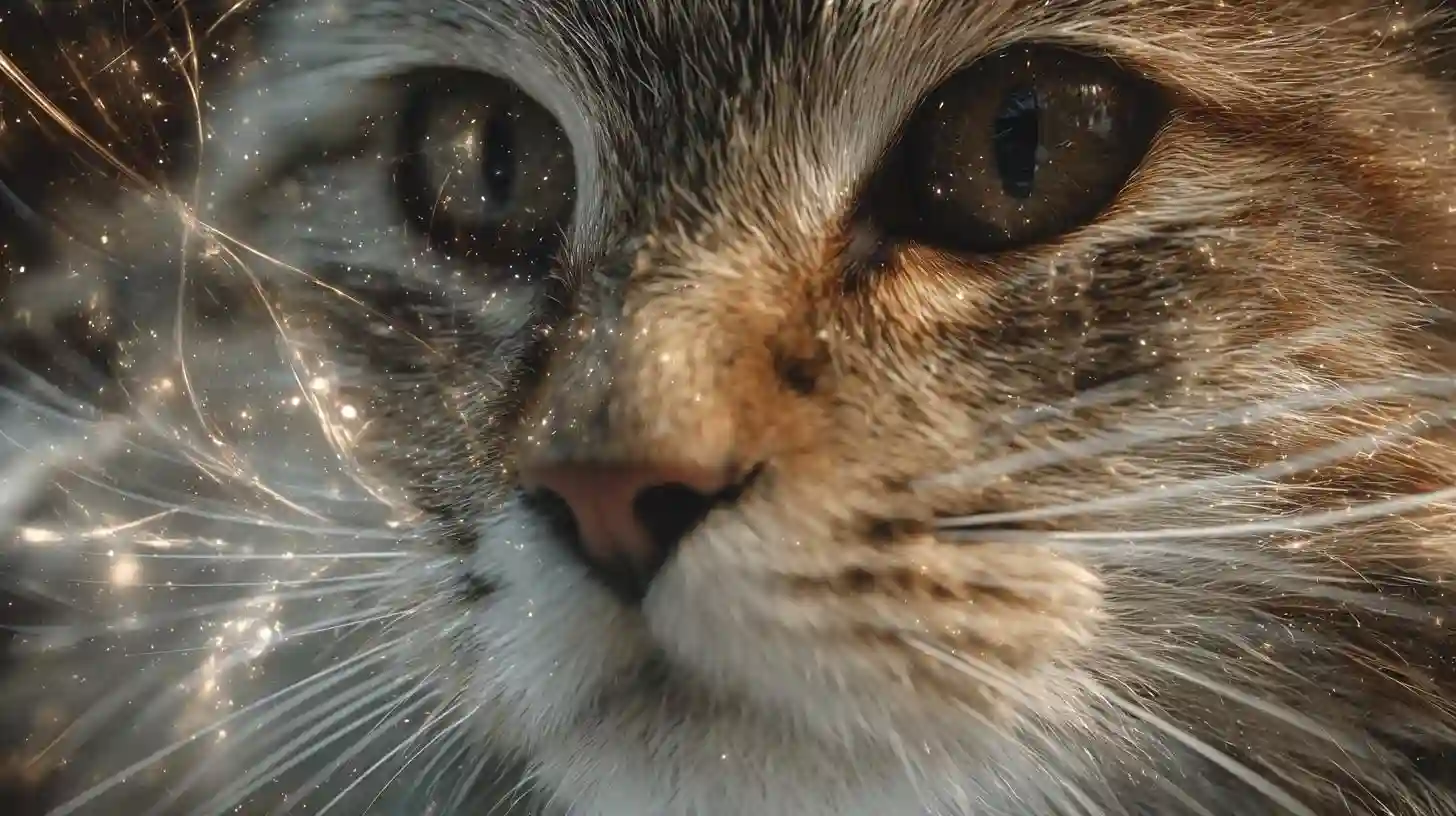
The relationship between cats and humans spans thousands of years, evolving from mutual benefit to a deeper emotional and social bond. While much of this connection is based on practical factors like companionship and pest control, there’s also a profound, often overlooked aspect: the way these two species communicate through body language. This fascinating evolution highlights not just a shared environment but a remarkable parallel in social behavior and emotional expression.
At the heart of this connection is the use of body language. Both cats and humans rely heavily on non-verbal cues to express their feelings, needs, and intentions. Over time, this mutual reliance on body signals has allowed both species to coexist and even thrive together. While a cat’s natural body language stems from its wild ancestry, domestic cats have adapted their movements and gestures in response to their human companions, creating a kind of shared vocabulary that is deeply rooted in both instinct and learned behavior.
Take the simple act of eye contact, for instance. In the wild, direct eye contact from a predator can signal threat, causing a cat to be on high alert. However, domestic cats have adapted to use slow blinking as a sign of trust and affection. Humans, in turn, have learned to recognize this behavior and may reciprocate it, which strengthens the bond between them. In fact, a slow blink from a cat has been found to lower a human’s stress levels, suggesting a physiological response that mirrors the emotional connection between the two species. The act of blinking slowly signals safety and comfort, a shared understanding that has evolved over time.
Similarly, a cat’s tail movements have become an integral part of how humans interpret feline emotions. A relaxed tail, held loosely and steadily, often signifies calmness and contentment. A tail flicking or lashing is a sign of irritation or agitation. Cats have refined these signals over the centuries in response to the human presence, which may have influenced the ways humans interpret and respond to these gestures. Humans have developed an acute awareness of these tail movements, which indicate when a cat feels threatened, playful, or affectionate, allowing them to respond accordingly and strengthen their relationship.
Another significant area where body language plays a crucial role is in the way cats use their body to seek attention. Cats often nudge, head-butt, or rub against their humans as a sign of affection and ownership. These behaviors, while rooted in instinct, have evolved within the context of domestic life. When a cat rubs its face against a human’s hand or body, it’s marking them with its scent, a territorial gesture that in the wild signifies a bond between members of the same group. In the context of human-cat relationships, it can be seen as an expression of trust and closeness. Over time, cats have refined this behavior, learning that it not only serves a territorial function but also serves to elicit affection and interaction from their human companions.
Similarly, the way cats move their bodies when they’re in different emotional states shows a deep connection with human understanding. A cat that curls up into a ball is often signaling that it feels safe and protected, much like a human wrapping themselves in a blanket for comfort. This universal gesture of seeking warmth and security allows for a deeper emotional resonance between the two species. Over time, cats have also learned to associate certain body movements with specific human reactions. For example, when a cat stretches, it often elicits a positive response from its owner, who may interpret the gesture as a sign of happiness or contentment, thus reinforcing the bond between them.
Perhaps one of the most compelling aspects of this body language evolution is how cats have learned to mimic human gestures. Some cats have been observed raising their paws as if to wave or reaching out for a human hand when seeking attention. These gestures may have been unintentionally reinforced by human interactions, but over time, cats have realized that certain behaviors result in desired outcomes, such as being fed, petted, or played with. This adaptive use of body language by cats shows a remarkable level of social intelligence and an evolving understanding of how to communicate with humans.
The way cats and humans use body language to communicate also reveals a shared emotional intelligence. Just as humans have the ability to read subtle cues in the body language of other people, they have developed a similar sensitivity to the movements and gestures of their feline companions. This mutual understanding of each other’s non-verbal signals strengthens the emotional connection and creates a unique, often unspoken bond between the two species.
The evolutionary journey between cats and humans has transformed from a simple survival relationship into one marked by emotional depth and mutual understanding. Through the subtle language of body movements, both cats and humans have learned to communicate their feelings, desires, and even vulnerabilities. This shared form of communication transcends the barriers of species and demonstrates a fascinating, evolving connection that continues to thrive in the companionship of cats and humans today.