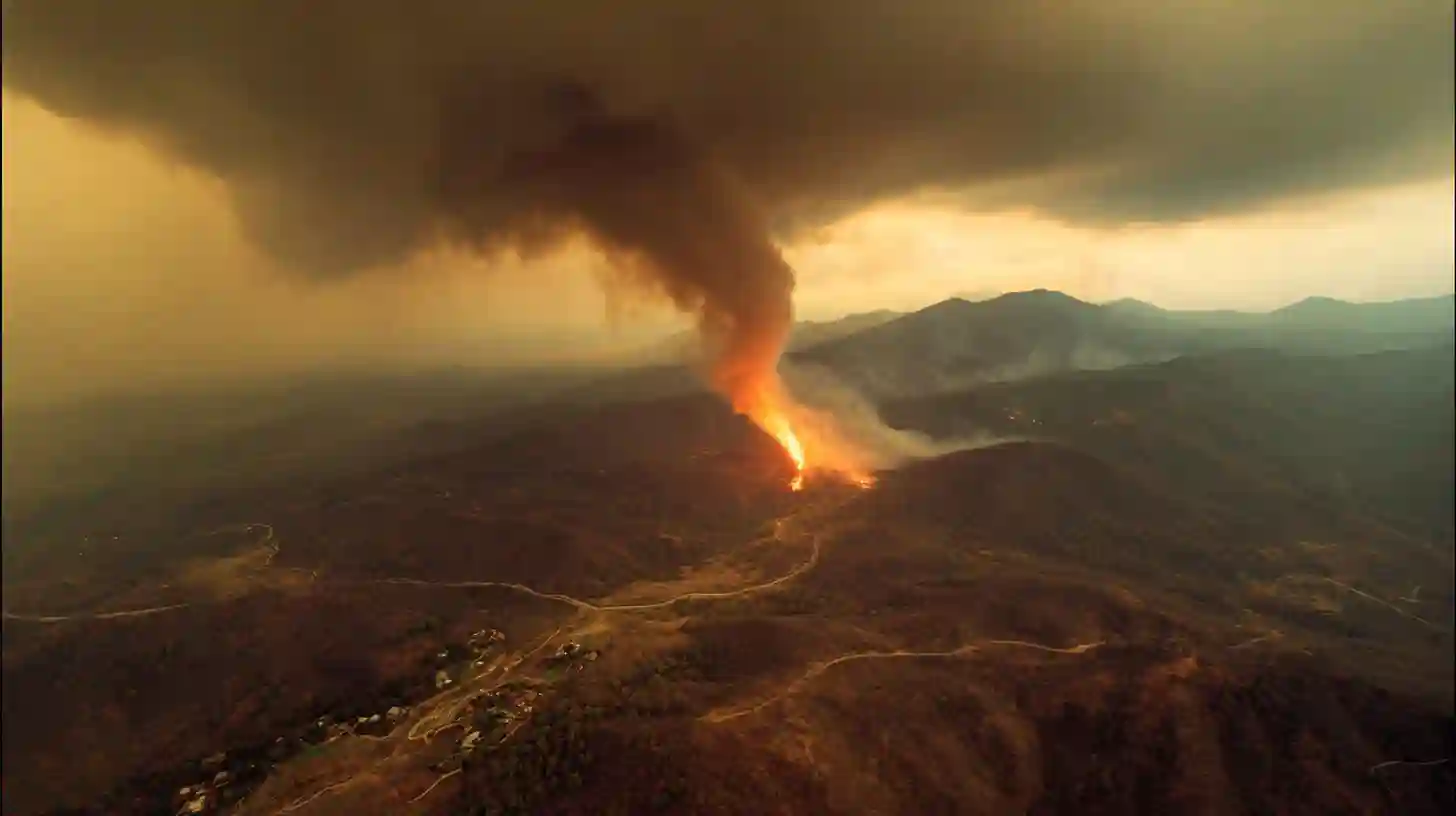
Astonishing fire whirls are among the most mesmerizing and terrifying expressions of wildfire behavior. They arise when heat from a blazing plume creates intense updrafts that pull in surrounding air, generating a rotating column that can lift and twist flames, smoke, and ash into a spiraling column of fire. In the moment when the atmosphere feeds itself with buoyancy and air enters with shear, the column begins to spin, collecting embers and fuel along its path. The result is a roaring, radiant core that can extend above the ground and create a funnel of flame that seems to dance across the landscape. Fire whirls are not classical tornadoes formed by storm scale air circulation, yet they share a sense of menace and a capacity to reshape everything in their grasp. They emerge from a confluence of heat, wind, and wilderness, a set of conditions that can be startlingly precise yet hard to predict. The heart of a fire whirl is a rapidly ascending, rotating updraft that generates its own microclimate. Within this volatile rotor, air is drawn into the furnace, carried upward by the compounding thrust of the flames and the smoke, then drawn into a spiral by small scale eddies and gusts. The rotating column acts as a chimney and a funnel at once, lifting and concentrating heat to levels that can melt metal and scorch soil, while the surrounding air is sucked into the whirled core in a chaotic but organized flow. The flames themselves become components of the spin, leaping and twisting in synchrony with the air, while glowing embers hitch rides on the vortex and are hurled outward like bright specks riding the current. The phenomenon is dramatic to witness, whether seen from a distant hillside, from a road escorted by emergency lights, or from the window of a plane that happens to drift above a smoke plume. Photographs and sightings from the field reveal a singular moment when a fiery spindle appears to drink in the sky, a staff of heat twisting with the smoke and air. Yet behind the theater there is science, a web of interplay among buoyant convection, wind shear, and the turbulence of a wild landscape in motion. When heat rises, air cools as it expands and becomes unstable, and in certain patterns of wind, the rotation can be seeded by pockets of vorticity already present in the air or generated by friction as wind sweeps over rough terrain, water courses, or burned ground left in the wake of a blaze. In such moments the atmosphere above the fires becomes a spinning cauldron, a rare alignment in which the energy of the blaze and the energy of the wind join to create a column that can span across broad irregular widths, a spectrum that lends itself to swift shifts and dangerous unpredictability. Fire whirls do not only threaten through heat and direct contact; they also carry blazing embers outward, scattering sparks that can ignite new fires distant from the main blaze, a mobile threat that travels on the same winds that drive the whirl. For firefighters and civilians, the sight can be a test of nerve as the fire moves with surprising speed, changing direction as gusts bend around ridges, canyons, and stands of timber, and then suddenly vanish as the wind alters or the heat field shifts. The social dimension of these phenomena is significant: communities brace for the possibility that a wildfire could spawn a new, looping ember pathway that lights roofs and dry brush and forces last minute evacuations, while land managers study how to create fuel breaks and plan suppression lines to weather the storm of a fire season that grows longer and more intense with changing climate patterns. The science continues to evolve with each encounter, as researchers use high altitude cameras, ground crews, and increasingly agile modeling to understand where and when fire whirls can form and how long they endure. Observers describe the experience in poetic terms—the roar of flame, the sparkle of flying embers, the way the air seems to thicken with heat, the way the ground shakes with the disturbance of a spinning column, and the eerie glow that paints the night sky. But there is another side, the cautionary tale of what these winds do to the land in their wake. After the heat of a fire whirl subsides, the landscape may bear the marks of a furious moment, with charred trunks standing like bones, soil stripped of its protective crust, and a mosaic of ash and mineral residues redistributed by the swirling motion. In this sense fire whirls become both omen and classroom—omens that signal how swiftly a wildfire can intensify and move, classrooms that reveal the hidden mechanics beneath the blaze. They remind communities that the weather and the landscape are not separate players but a joined system, and they invite a sense of humility toward forces that can turn a hillside into a spinning furnace before the eye can register what is happening. The awe and fear that surround fire whirls are mirrored in the way people tell stories about them, in art and photography that freezes a moment of spinning heat into a symbol of nature's unbridled energy, and in the way scientists search for patterns that might one day allow forewarning that a fire is brewing into a whirl before it becomes a danger to life and home.