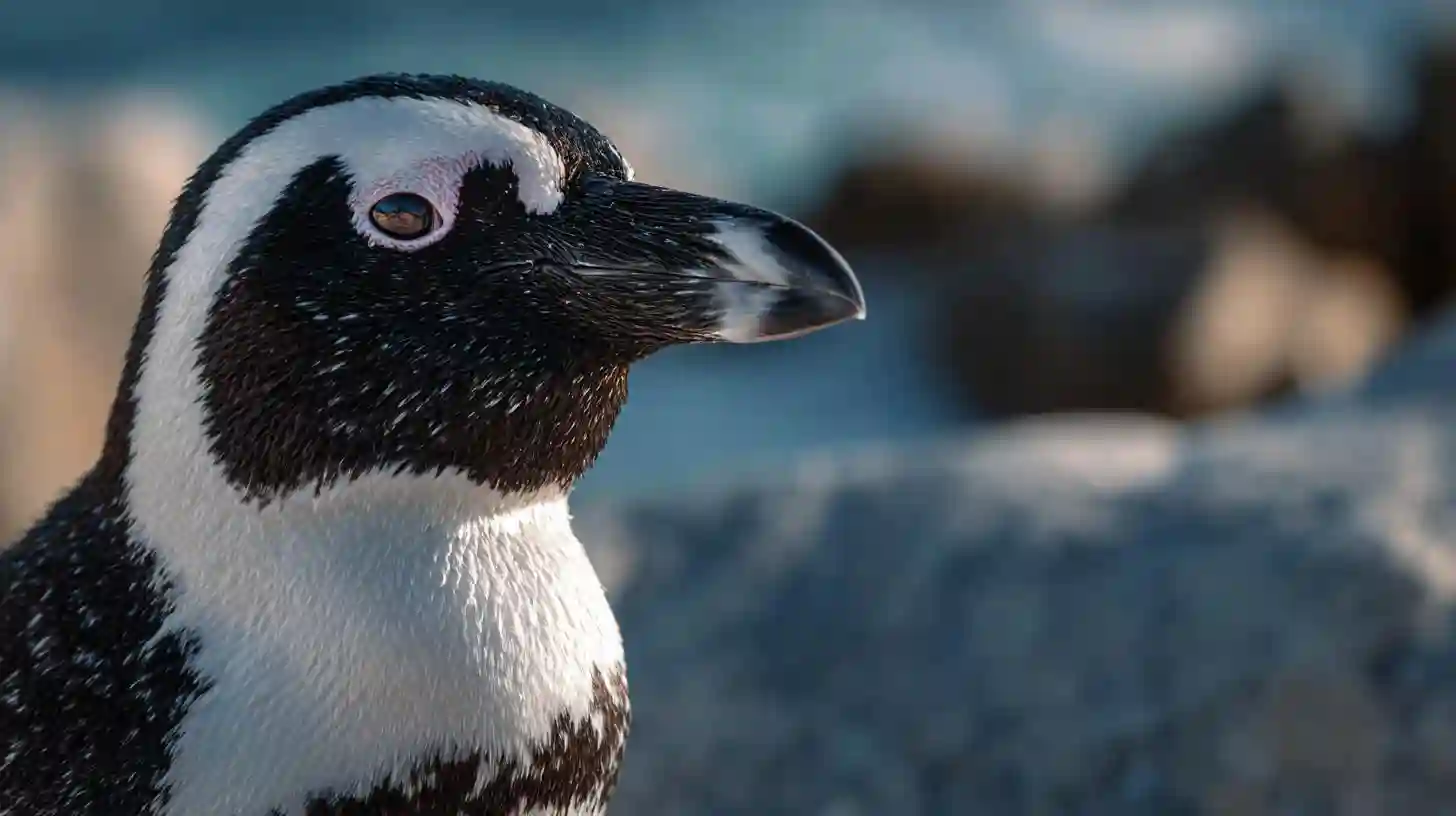
The African Penguin, also known as the Jackass Penguin due to its distinctive braying call, is a unique and captivating species that stands out in the world of penguins. Unlike their cold-water relatives, the African Penguin thrives in the warmer climates of the Southern African coast. These penguins are found primarily along the coasts of South Africa and Namibia, making them the only penguin species that inhabits the continent of Africa. This adaptation to warmer temperatures sets them apart from the majority of penguins that are typically associated with icy landscapes.
The African Penguin is a medium-sized bird, with a sleek, black-and-white appearance that is instantly recognizable. Their bodies are perfectly adapted for life in the water, with strong, flipper-like wings that act as efficient paddles. These penguins are exceptional swimmers, often diving to depths of over seventy meters in search of food. Their diet consists primarily of small fish such as anchovies, sardines, and squid. To catch these fast-moving prey, African Penguins rely on their speed and agility, swimming at impressive speeds that help them close the gap on their targets.
One of the most fascinating aspects of the African Penguin is its unique breeding habits. They nest in burrows or under rocks, seeking out shaded areas to protect their eggs and chicks from the harsh African sun. These penguins are monogamous and form lifelong pairs, often returning to the same nesting sites year after year. Their breeding season is marked by elaborate courtship rituals, where the males will present pebbles or small stones to the females as a way to win their affection. This behavior adds a layer of complexity to their social structure, showcasing their emotional bonds and commitment to family.
Although these penguins are adapted to living in warmer climates, they still face many of the same threats as their colder relatives. African Penguins are classified as endangered due to a variety of factors, including habitat destruction, pollution, and overfishing. The depletion of fish stocks due to commercial fishing practices has made it increasingly difficult for these penguins to find enough food. Additionally, human encroachment on their nesting sites has led to a decline in suitable breeding locations. Climate change also poses a significant threat, as rising temperatures can disrupt their delicate ecosystem and make it harder for them to thrive.
Conservation efforts have been implemented to help protect the African Penguin. Marine protected areas have been established along their coastal habitat, and efforts to reduce pollution and prevent overfishing have been prioritized. Additionally, some organizations are working to establish artificial nests to provide safe breeding sites for the penguins. These measures have seen some success, but the future of the African Penguin remains uncertain unless more robust actions are taken to ensure their long-term survival.
Despite their challenges, African Penguins remain a symbol of resilience and adaptation. Their ability to survive in a climate much warmer than most other penguin species is a testament to their unique characteristics and evolutionary path. Their charismatic appearance and distinctive behaviors make them a beloved species among wildlife enthusiasts and conservationists alike. The African Penguin is more than just a fascinating animal; it is a reminder of the delicate balance of nature and the importance of protecting the environments in which these remarkable creatures live. As we continue to learn more about them, it is crucial that we remain committed to preserving their habitats and ensuring that future generations can witness the charm of these incredible birds.