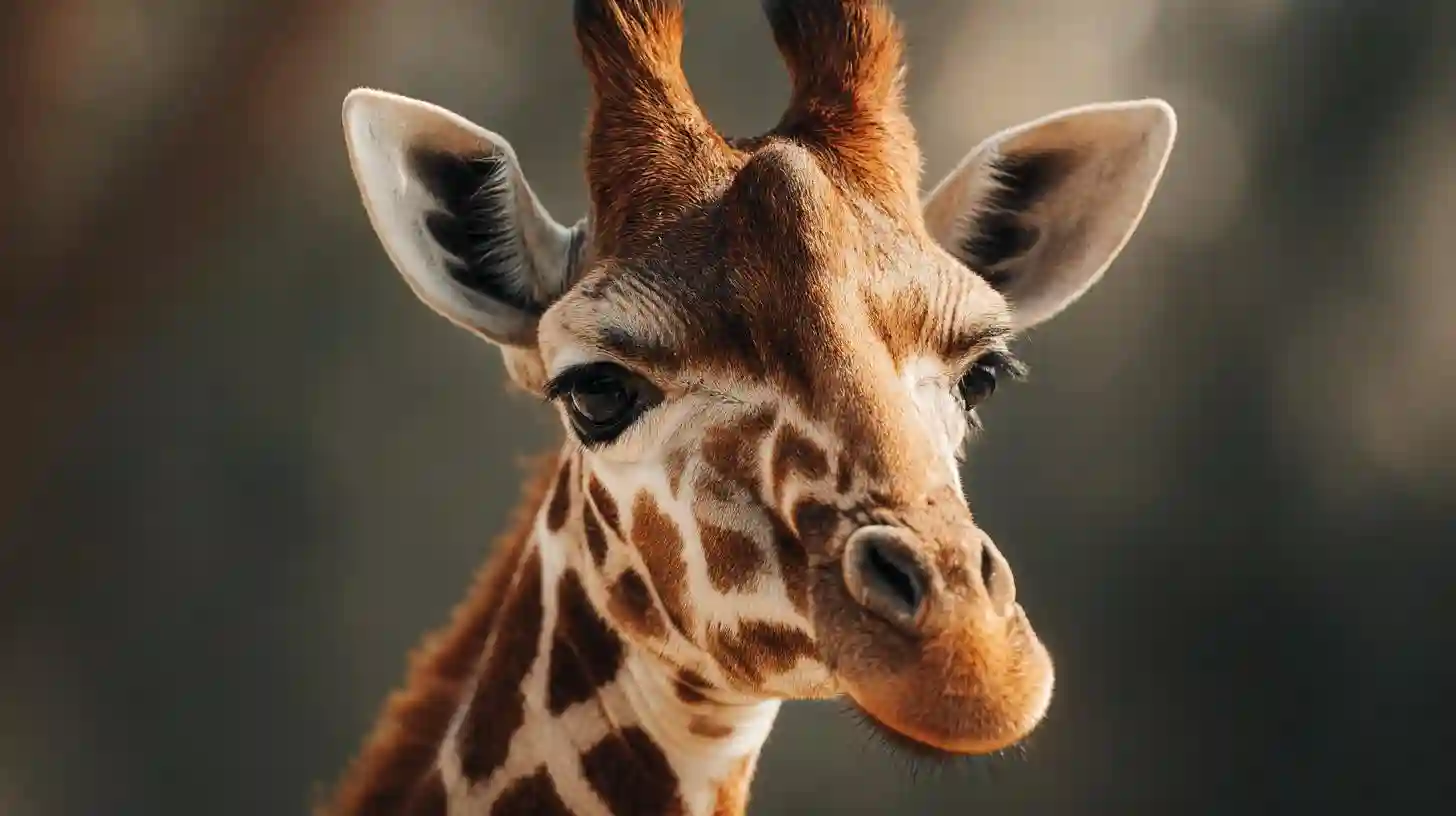
Giraffes are among the most recognizable animals in the world, with their towering height and distinctive long necks making them stand out in any landscape. These gentle giants are native to the savannas and open woodlands of sub-Saharan Africa, where their unique adaptations allow them to thrive in environments where other herbivores might struggle. A giraffe's neck, which can be as long as six feet, is one of its most defining characteristics. Contrary to what some may think, giraffes do not have more neck bones than humans; they have seven cervical vertebrae, the same number as most mammals, including humans. However, each of these bones is much longer, allowing the giraffe to reach the high branches of trees where they feed on leaves, primarily from acacia trees. Giraffes are ruminants, meaning they regurgitate their food to chew it again in a process known as cud chewing. This helps them extract more nutrients from the tough leaves they consume. Their long necks also give them an advantage when it comes to spotting predators. From a great height, giraffes can see over vast distances, giving them ample time to react if a threat approaches. Their eyesight is remarkably sharp, which helps them detect even the slightest movement from afar. Giraffes' legs are as impressive as their necks. The creatures' long, sturdy limbs allow them to run surprisingly fast, reaching speeds of up to thirty-five miles per hour in short bursts. Despite their massive size, they are agile and can navigate through dense foliage with ease. Interestingly, their legs are so long that when a giraffe drinks, it must spread its legs apart and bend down awkwardly to reach the water. This unique drinking posture makes them vulnerable to predators, and they tend to be very cautious when approaching water sources. Giraffes are social animals that live in loose groups known as herds, which are generally formed by females and their offspring. Males, on the other hand, often roam alone or form small bachelor groups. These herds do not have a strict social structure like other animals, and the giraffes within them often come and go. Interaction within the herd is generally peaceful, with giraffes occasionally engaging in necking battles. During these "necking" contests, males swing their heads like hammers, aiming to land powerful blows on each other with their necks. These bouts are typically not deadly but serve as a way to establish dominance and secure access to mates. Giraffes communicate with each other using various sounds, although they are generally quiet animals. They produce low, grumbling sounds that are difficult for humans to hear, as well as more audible snorts and hums when interacting with others. Interestingly, giraffes have a very limited vocal range compared to other animals, and much of their communication happens through body language and posture. A giraffe’s coat is another distinctive feature. Each giraffe has a unique pattern of spots on its fur, and no two giraffes are exactly alike. The patterns can vary widely, with some giraffes having larger, irregular patches, while others have smaller, more defined spots. These patterns are believed to serve several purposes. They help camouflage the giraffe in the dappled light of the savanna, allowing it to blend in with the surrounding trees and shrubs. The spots also play a role in regulating body temperature. The skin beneath the patches is covered with blood vessels that help control the animal’s internal temperature by allowing heat to dissipate more efficiently. In terms of reproduction, giraffes have a gestation period that lasts about fifteen months, which is one of the longest among land mammals. After giving birth, the mother usually stays in seclusion for a few days to bond with her calf, which can stand and walk within hours of birth. Giraffes are known to be nurturing mothers, and the calves are raised within the protection of the herd. Over time, a young giraffe learns the skills it needs to navigate the world and eventually becomes part of the larger social structure. Giraffes face many challenges in the wild. While they are not currently listed as endangered, they are classified as vulnerable due to habitat loss, poaching, and human-wildlife conflict. As the human population expands and more land is used for farming and development, giraffes are increasingly forced into smaller, fragmented habitats. Conservation efforts are underway to protect these magnificent creatures, but their survival will depend on both preserving their natural habitats and ensuring they are safeguarded from illegal hunting and habitat encroachment. The giraffe is an animal that captivates the imagination of people all over the world. From its towering height to its elegant movements, it’s no wonder that this majestic creature holds such a special place in the hearts of nature enthusiasts and wildlife admirers alike. Whether seen grazing on the plains or gracefully walking through the wild, the giraffe’s presence in the African landscape remains a symbol of beauty and wonder.