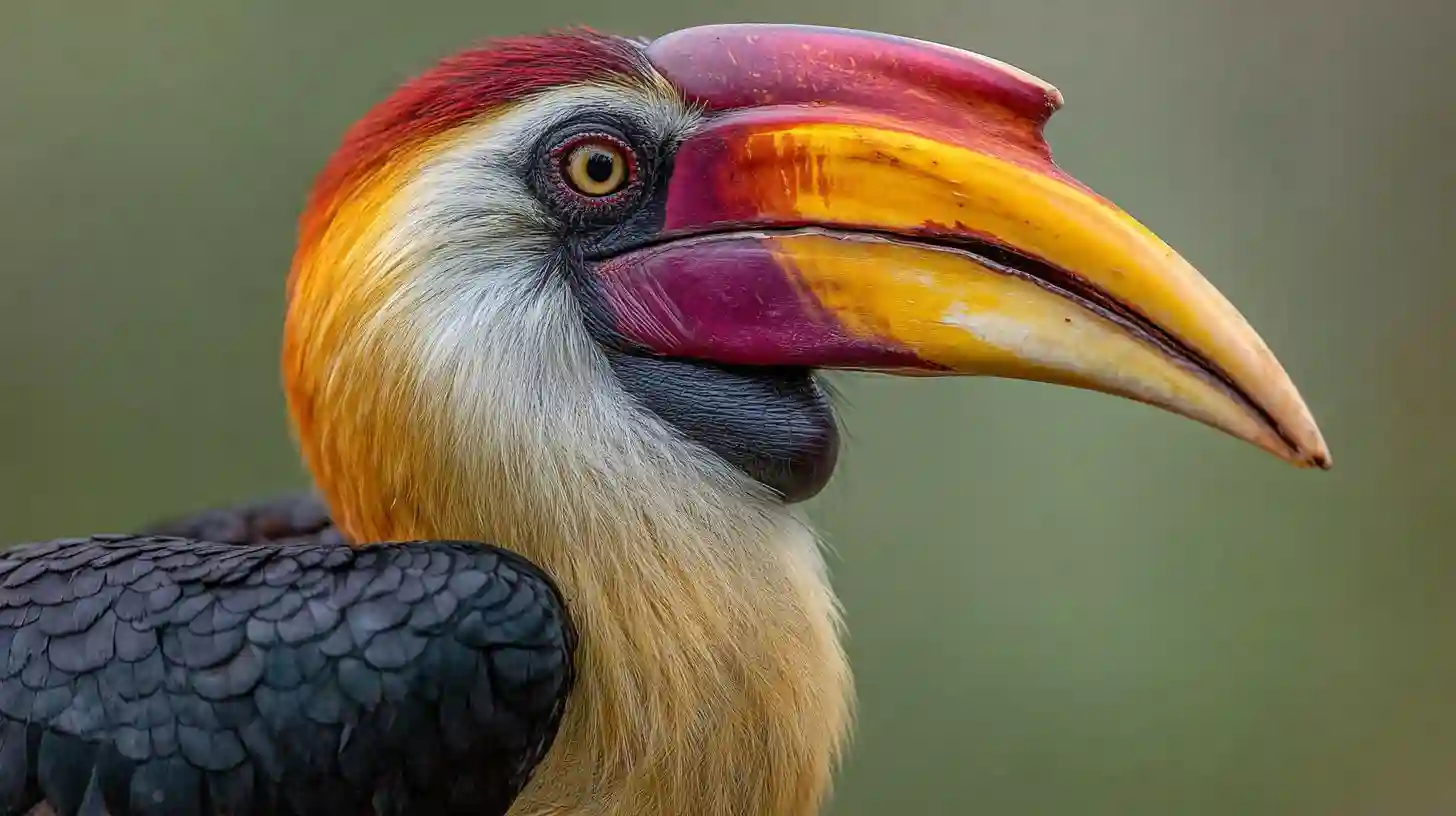
Across tropical canopies and forest interiors, the omnivorous hornbill functions as a keystone agent in the ecosystem. Its diet blends ripe fruit with insects and other small prey, a versatility that allows it to exploit seasonal pulses of resource availability while moving through a broad vertical range of the forest. By consuming fruit and later depositing seeds as it travels, the hornbill serves as a highly effective seed disperser, distributing large-seeded species far from parent trees and enabling seedlings to establish in light gaps and secondary growth areas that are important for forest renewal after disturbance. The seeds that pass through the hornbill’s digestive system are often dispersed with their coats scarified and ready to germinate, a mechanism that can enhance germination rates and seedling vigor for certain plant species; as a result, plant diversity and structural complexity are bolstered, contributing to the resilience of the forest in the face of climate variability and disturbance. The hornbill’s movement across the canopy and into mid levels of the forest acts as a natural conveyor belt, linking distant patches of habitat and supporting gene flow among plant populations. This connectivity is especially valuable in fragmented landscapes, where corridors and stepping stones are essential for maintaining the continuity of ecological processes that many species depend on. In addition to dispersal, the omnivorous hornbill exerts influence over insect populations and the health of trees by preying on wood-boring larvae and other invertebrates that can either weaken trees or reduce fruit quality and yield; by controlling these potential pests, hornbills contribute to the vigor of fruiting trees, which in turn supports a broader community of frugivores and other forest dwellers. The hornbill’s role extends into the realm of habitat structure. These birds nest in large cavities high in tall trees, a nesting requirement that makes their life histories tightly coupled to the presence of mature trees and intact forest canopies. As forests are cleared or degraded, cavity availability declines, and hornbill reproduction can falter, triggering changes in seed dispersal dynamics and the health of plant communities that rely on their services. Yet when hornbills are present in healthy forests, their nesting and roosting behavior sets off a cascade of ecological effects. Empty cavities left behind by breeding hornbills or abandoned after nesting can be used by a suite of other organisms, from small mammals to other birds and invertebrates, creating microhabitats that increase local biodiversity and add to the structural richness of the forest. The foraging craft of hornbills also shapes the spatial pattern of fruiting across the landscape. By selecting particular fruit resources and moving with a deliberate rhythm through the canopy, they influence which trees are effectively recruited in different microhabitats. The result is a mosaic of forests that display greater heterogeneity in tree composition, canopy density, and understory structure, all of which provide shelter and food for a wider array of wildlife. Such complexity strengthens the forest’s capacity to withstand and recover from perturbations, whether they arise from storms, drought, or human disturbance. In the broader picture, the omnivorous hornbill embodies an array of ecological services that collectively sustain the vitality of tropical ecosystems. Its appetite for fruit drives seed dispersal and plant regeneration; its appetite for insects helps keep pest pressures in check; its nest site preferences tie its fortunes to the survival of ancient trees and intact forest cover; and its movements knit together distant parts of the forest into a living network that maintains diversity and connectivity. This combination of services makes the hornbill not merely a visitor to the forest but a central actor in its ongoing functioning, a mask of resilience in the face of environmental change, and a reminder that the survival of large, charismatic birds is inseparable from the health of the landscapes that support them. Recognizing the ecological significance of the omnivorous hornbill invites a broader appreciation for the value of protecting whole forest ecosystems rather than exporting their components to other realms, and it underscores the responsibility communities and policymakers bear for safeguarding habitat continuity, safeguarding old-growth trees, and maintaining intact corridors that allow these remarkable birds to travel, forage, breed, and continue to shape the forest that sustains so many forms of life.