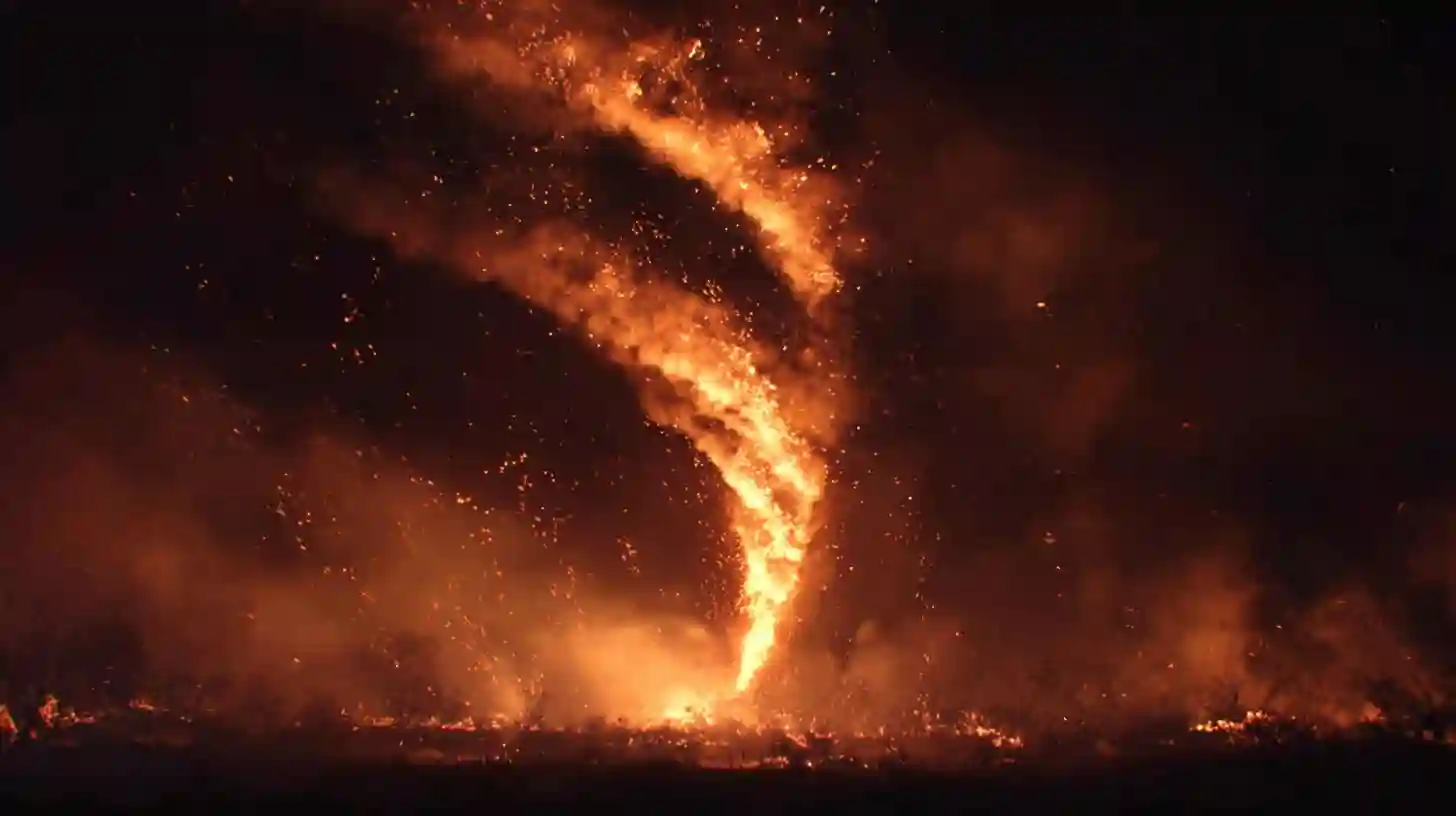
Amid the chaos and destruction wrought by wildfires, nature has a way of unleashing astonishing phenomena that are as mesmerizing as they are terrifying. One such event is the fire whirl, often referred to as a fire tornado. These captivating, albeit hazardous, formations occur when intense heat and turbulent winds combine to create a vertical column of flames, embers, and gaseous combustion products. The allure of fire whirls lies not only in their dramatic presence but also in the science behind their formation, which presents a unique interplay between environmental conditions and fire behavior.
Fire whirls generally originate from the intense heat generated by the flames of a wildfire. As the blazing inferno consumes dry vegetation and organic material, it produces a significant amount of heat. This heat causes the air above the fire to expand rapidly, decreasing its density and leading to an upward draft. Concurrently, surrounding cooler air rushes in to fill the void created by the rising hot air, initiating the formation of a vortex. If environmental conditions remain right—primarily wind patterns and thermal contrasts—the vortex can stabilize and intensify, resulting in a swirling column of fire. The fire whirl can reach impressive heights and can toss burning debris into the air, further spreading flames and intensifying the already dire situation.
Fire whirls are often most prevalent in large, uncontrolled wildfires, where the scale of heat production and the chaotic wind patterns are most pronounced. These tornado-like structures can vary in size and intensity, influenced by the specific characteristics of the wildfire and its surrounding environment. They can manifest in several forms, with some resembling a towering twist of flames, while others appear as smaller, more erratic whirlwinds of fire that dance unpredictably. Witnesses often describe the sight as surreal, a blend of beauty and catastrophe, as the flames spiral upwards with a life of their own.
The existence of fire whirls has perplexed observers throughout history, inspiring fascination and folklore among those who live in fire-prone areas. Many cultures have interpreted these fiery phenomena as omens or signs due to their unusual and dramatic appearance. Scientific inquiry into fire whirls, however, has revealed the complexity of their behavior. Atmospheric conditions, such as humidity, temperature gradients, and wind speed, play significant roles in their formation and evolution. Researchers have adopted advanced modeling techniques to simulate these phenomena, aiming to better understand their dynamics and potential impacts on wildfire spread.
While the visual impact of a fire whirl may seem captivating, the dangers they pose cannot be overstated. Fire whirls can act as unpredictable agents of destruction, igniting new fires far beyond the original blaze’s perimeter. The embers and debris that are lofted high into the atmosphere can create spot fires several miles away from the main flames, exacerbating an already challenging firefighting scenario. The erratic nature of these phenomena adds significant complexity to wildfire management and response efforts. Firefighters must remain vigilant and adaptable when working in the vicinity of active fire whirls, as their unpredictable paths can create new hazards and risks at a moment’s notice.
The increased frequency and intensity of wildfires linked to climate change have also prompted renewed interest in fire whirls and their behaviors. As temperatures rise and drought conditions become more prevalent, wildfires are expected to become more severe and widespread. The emergence of fire whirls in these intensified conditions poses a significant threat to life, property, and ecosystems. Observing and studying these phenomena can provide valuable insights into the behavior of wildfires and may inform future strategies for mitigation and emergency response.
In the face of devastating wildfires, the presence of fire whirls serves as a stark reminder of the raw power of nature. While their beauty can be captivating, it is essential to recognize the potential dangers they embody. As scientists continue to investigate the mechanics behind these fire tornadoes, understanding their formation will be crucial in developing better forecasting techniques for wildfire behavior. Awareness of the characteristics and occurrences of fire whirls may empower communities to prepare more effectively for wildfire events, enhancing overall resilience in the face of nature's formidable forces.