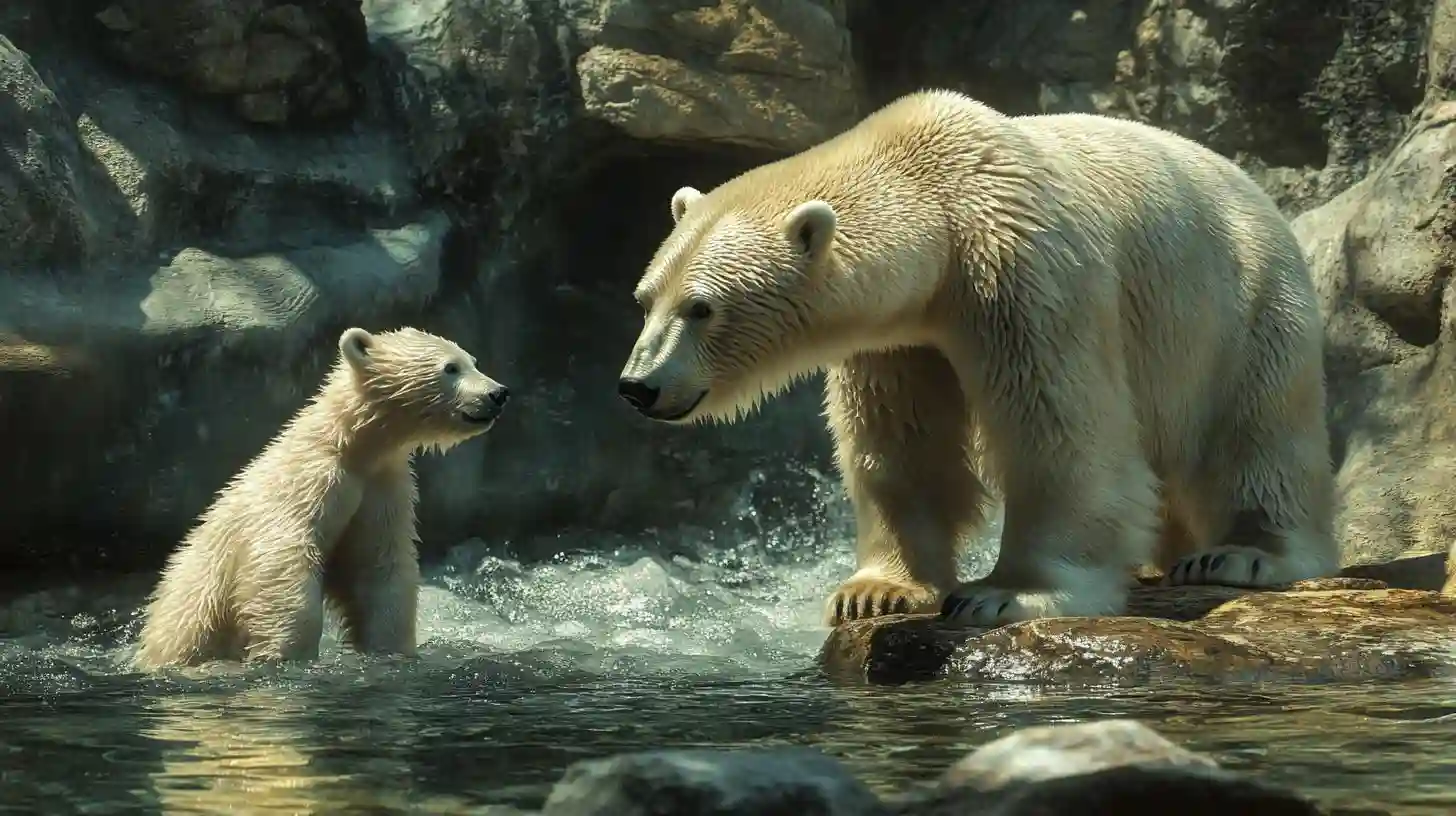
Polar bears are extraordinary creatures that have evolved to thrive in one of the harshest environments on Earth, the Arctic. Their survival is a remarkable study of adaptation and resilience, marked by unique physical characteristics and innovative hunting strategies. Recognized for their white or yellowish fur that camouflages them against the icy backdrop, polar bears possess a thick layer of blubber beneath their skin, which offers insulation against frigid temperatures. This subcutaneous fat can be several inches thick, providing not just warmth but also an energy reserve when food is scarce.
An essential feature of polar bears is their large, powerful limbs, which are well adapted for both swimming and walking across the ice. The size of their paws helps distribute weight effectively, enabling them to traverse the unstable, melting sea ice with relative ease. Their fur, while appearing white, actually consists of transparent, hollow hair that reflects light, allowing the bears to blend seamlessly into their snowy surroundings. This natural camouflage aids crucial hunting activities, particularly when stalking seals, their primary prey.
Polar bears are considered marine mammals due to their dependence on the ocean for their food supply. They are accomplished swimmers, capable of covering long distances in search of solid ice platforms to rest upon. Their large, webbed paws make them efficient swimmers and enable them to move swiftly through the icy waters of the Arctic Ocean. When hunting, they often use a technique called still-hunting, wherein they patiently wait by an open hole in the ice, known as a breathing hole, where seals surface for air. This method requires immense patience and stealth, showcasing the intelligence and adaptability of these magnificent animals.
In addition to their impressive physical adaptations, polar bears have developed keen senses to aid in their survival. Their sense of smell is particularly acute, allowing them to detect seals nearly a mile away and beneath several feet of compacted snow. This sense is invaluable during the hunt, as it enables the bears to locate their preferred prey even in the vast, desolate expanse of the Arctic. Their excellent eyesight and sense of hearing further enhance their ability to navigate their environment and find food.
Another noteworthy aspect of polar bear survival is their ability to deal with the challenges posed by their changing environment. As climate change leads to the melting of sea ice, polar bears are forced to adapt to an increasingly unpredictable landscape. Many bears are now required to swim greater distances than before in search of stable ice or food sources. This can result in exhaustion and malnutrition, particularly in younger bears and mothers with cubs. To counter this, polar bears are known to alter their hunting patterns and venture further onto land during times when ice is scarce.
The social structure of polar bears is another fascinating element of their survival. Typically solitary animals, they do come together during the breeding season and can occasionally be observed engaging in playful interactions. Mothers are particularly dedicated to their young, nurturing and teaching them essential skills for survival in the Arctic. Cubs spend the first few months of their lives in a den with their mother, learning how to hunt and navigate their icy habitat before venturing out into the world.
Despite their formidable adaptations, polar bears face numerous threats in today’s world. Climate change remains the most significant challenge, as rising temperatures lead to habitat loss. Additionally, increased human activity in the Arctic–due to shipping, oil exploration, and fishing–poses further risks to their populations. Conservation efforts are underway, emphasizing the importance of protecting their natural habitat and reducing global greenhouse gas emissions.
The survival strategies of polar bears invite admiration and respect for nature's marvels. Their impressive cold resistance, swimming prowess, and effective hunting techniques demonstrate the remarkable power of adaptation in the face of environmental challenges. As the world continues to grapple with the impacts of climate change, the plight of polar bears serves as a poignant reminder of the fragile balance within ecosystems and the urgency required to preserve our planet's natural wonders for future generations. Observing these majestic animals in their natural habitat is not only a testament to nature's ingenuity but also a call to action for their protection and conservation.