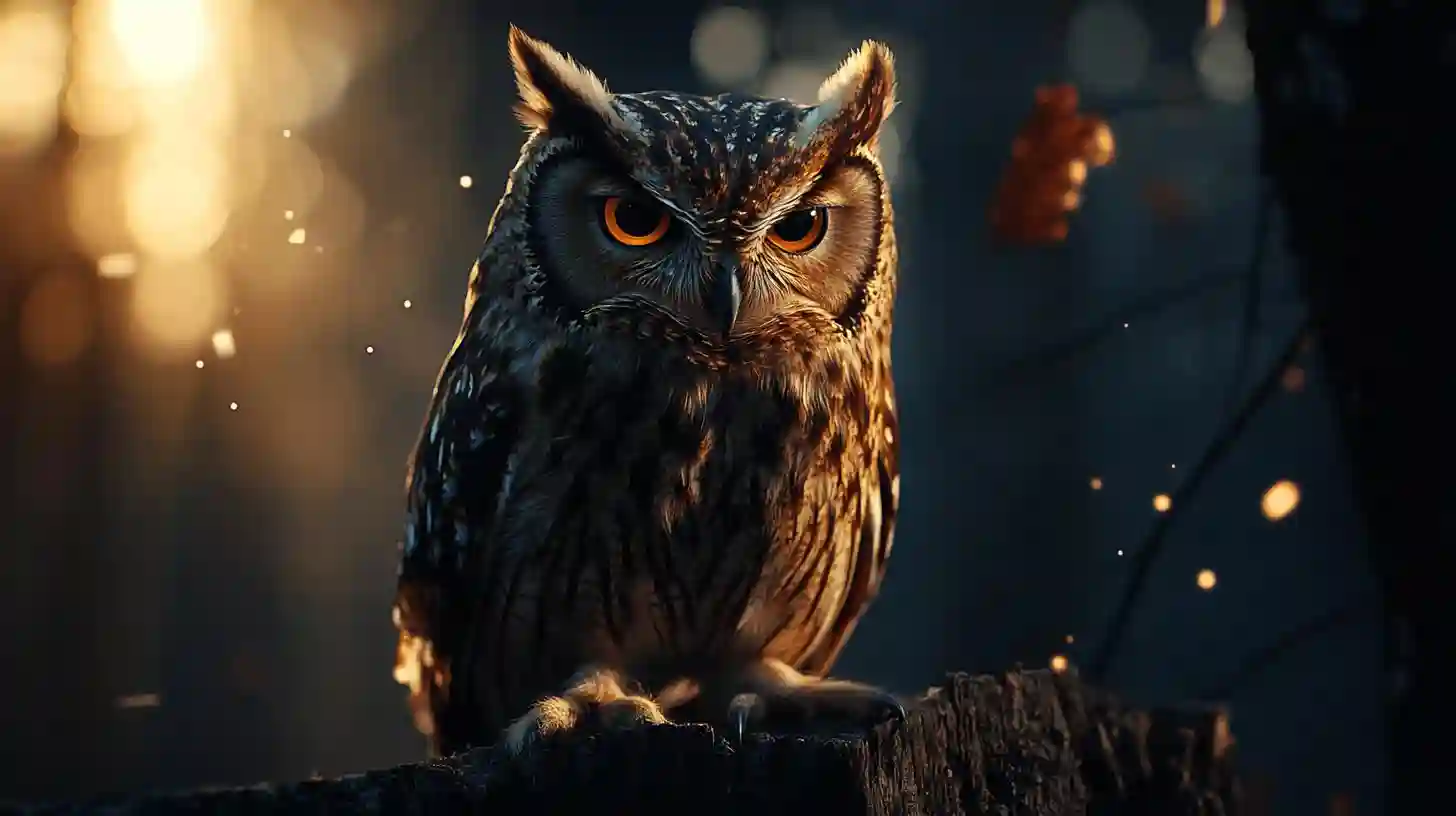
The unique adaptations of owls make them some of the most efficient hunters in the animal kingdom, particularly during the night. Among these adaptations, the feathers of owls play a pivotal role in their reputation for stealth. Unlike many birds, which produce typical wing sounds when they fly, owls have evolved a specialized feather structure that allows them to glide silently through the darkness. This silent flight is a crucial factor in their predatory success, enabling them to ambush prey without being detected.
Owls possess specialized leading edges on their wing feathers that help to reduce turbulence and minimize sound production. These feathers have serrated edges, which disrupt the air as it flows over the wings. This unique design helps to break up the turbulent air currents that typically create noise when a bird flies. The combination of the serrated leading edges and the soft texture of their wings significantly dampens sound, allowing these nocturnal hunters to approach their prey without alerting them to their presence.
Additionally, the trailing edges of an owl's wing feathers are soft and velvety rather than stiff like those of many other birds. This softness further reduces noise during flight. While many birds rely on stiff feathers to provide lift and maneuverability, owls have adapted to prioritize silence over speed. The result is a silent fly pattern that makes it nearly impossible for prey such as small mammals or birds to hear their approach, giving owls a distinct advantage during their nighttime hunts.
Owls are also equipped with considerable wing surface area in relation to their body size, which aids in gliding. Their broad wings allow for slower flight speeds, creating a low-pressure state that minimizes noise. By using this gliding capability, owls can cover considerable distances while remaining almost completely silent. When combined with the extraordinary auditory capabilities of their ears—positioned asymmetrically on their heads to help location prey through sound—this silent flight enhances their overall hunting efficiency.
The effectiveness of these silent feathers becomes particularly evident during the hunt. Owls often perch silently, waiting for the telltale sounds of scurrying prey. Once they detect movement, they take off using their stealthy flight. Whether a field mouse darting through the underbrush or a rabbit grazing in a meadow, most prey animals are oblivious to the imminent danger until it is too late. The ability to approach stealthily gives owls the element of surprise, allowing them to strike with incredible precision.
Beyond their wing adaptations, owls showcase other remarkable features that contribute to their success as predators. Their keen eyesight enables them to see in low-light conditions, making them adept at spotting movement even in the darkest environments. Owls generally have large, forward-facing eyes that provide them with excellent depth perception, crucial for spotting and accurately targeting prey. The eyes are also equipped with a high density of rod cells, which makes them particularly sensitive to light, allowing owls to see well even during twilight hours or in near darkness.
In conjunction with their vision and silent flight, owls possess impressive hunting skills. Their powerful talons, designed for grasping and killing, complete their predatory arsenal. Once an owl has zeroed in on its target, it can swoop down with incredible speed and force, capturing its prey before it has a chance to escape. Coupled with their silent approach, this combination of strength, skill, and stealth makes owls masters of the night.
The ecological role of these magnificent creatures goes beyond hunting. By maintaining the population of smaller mammals and birds, owls help keep ecosystems balanced. Their behavior and hunting techniques reflect a finely tuned relationship with their environment, showcasing how adaptations like silent feathers not only benefit their survival but also contribute to ecological dynamics.
The stealthy capabilities of owls have mesmerized humans for centuries, leading to their portrayal in folklore, mythology, and popular culture. Their ability to glide silently through the dark has captured the imagination, symbolizing wisdom and mystery. Whether soaring above dense forests or gliding through open fields, owls embody the harmonious relationship between an animal's adaptations and its ecological niche. The silent feathers of these night hunters represent a remarkable evolutionary strategy, highlighting nature's ingenuity and the intricate balance of predator and prey in the wild. Through their remarkable adaptations, owls continue to embody the stealth and grace that define them as formidable nocturnal predators.