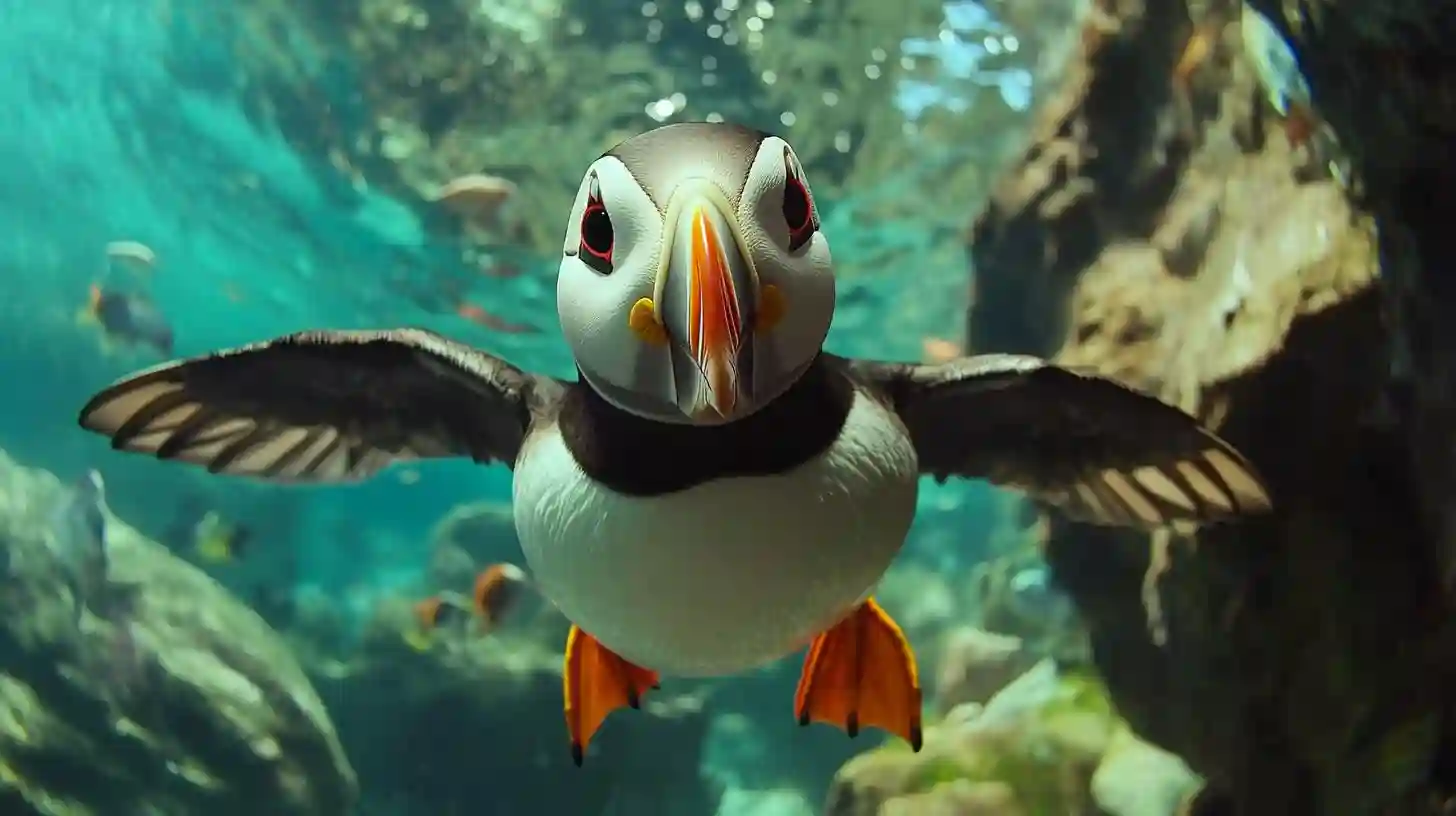
The Atlantic puffin, a small seabird renowned for its distinctive appearance and charming personality, offers a delightful spectacle along the rugged coastlines where it resides. These birds, often referred to as the “clown of the ocean,” are easily recognizable by their striking coloration, featuring a combination of white, black, and vibrant orange hues. With a stout body, short wings, and a large, colorful bill, they exude a unique charisma that has captured the hearts of birdwatchers and casual observers alike.
Breeding season brings the puffins back to rocky cliffs and islands in the North Atlantic, where they gather in large colonies. Their nesting sites, often located in burrows or crevices, provide safety from predators. Observing these birds during their breeding rituals is a delightful experience. Puffins engage in playful courtship displays, bobbing their heads, diving, and even engaging in bill clapping — a behavior that showcases their colorful bills and strengthens their pair bonds. This engaging behavior, coupled with their comical waddling movements on land, makes puffins endearing to all who encounter them.
Puffins are particularly famous for their impressive fishing prowess, diving deep into ocean waters to catch fish, primarily herring and sand eels. By using their wings to propel themselves underwater, they can reach depths that baffle observers. With their capacity to hold multiple fish in their beaks at once, puffins become a symbol of efficiency and skill in foraging. Their feeding techniques often leave onlookers in awe, as they expertly navigate the underwater world.
The life cycle of the Atlantic puffin is fascinating and tied closely to the rhythm of the seasons. After spending the winter months in the open ocean, puffins return to their breeding grounds in spring. They communicate with each other through a variety of vocalizations, using a mix of grunts and whistles that echo across their colonies. The arrival of puffins signifies a vivid transformation of coastal environments, as larger colonies attract attention from both wildlife enthusiasts and researchers studying their population dynamics.
The Atlantic puffin's migratory patterns add another layer of intrigue to their life history. As they return to their breeding grounds each year, their presence signals changes in ocean currents and fish populations. These birds are vital indicators of environmental health, revealing the impact of climate change on marine ecosystems. The decline in fish availability due to overfishing and climate shifts poses threats to puffin populations, raising concerns among conservationists about their long-term survival.
Human interaction with puffins often highlights the balance needed to protect these captivating birds. Ecotourism has grown around puffin watching, creating economic opportunities for communities near breeding sites. Responsible tourism practices help ensure that puffins can thrive without excessive disturbance. Educational programs and wildlife tours raise awareness about puffins and their habitat needs, fostering a deeper appreciation for biodiversity in coastal regions.
Conservation efforts are crucial to safeguard puffin populations, particularly as climate change continues to exert pressure on marine ecosystems. Establishing marine protected areas, implementing sustainable fishing practices, and addressing pollution are vital strategies in preserving puffin habitats. Organizations dedicated to seabird conservation work tirelessly to monitor puffin populations and advocate for policies that mitigate threats to their survival.
Shared by many, the affection for puffins transcends borders and cultures. They have found their way into literature, art, and folklore, symbolizing resilience and the beauty of nature. Puffins embody the spirit of the wild oceans, serving as ambassadors for marine conservation. Their colorful presence draws people to the coastlines, sparking curiosity about the natural world and inspiring action to protect the fragile ecosystems they inhabit.
Observing Atlantic puffins in their natural habitat is a breathtaking experience, evoking a sense of joy that resonates with people of all ages. The combination of their whimsical appearance and captivating behavior serves to remind us of the importance of preserving the habitats that support such enchanting wildlife. As climate change continues to reshape the oceans, ensuring a bright future for sparking joy in the hearts of countless fans becomes increasingly vital. The Atlantic puffin's charm and playful spirit have cemented its place as one of the most beloved avian species in the world, endearing itself to the hearts of anyone fortunate enough to witness its antics along the coastlines of the North Atlantic.