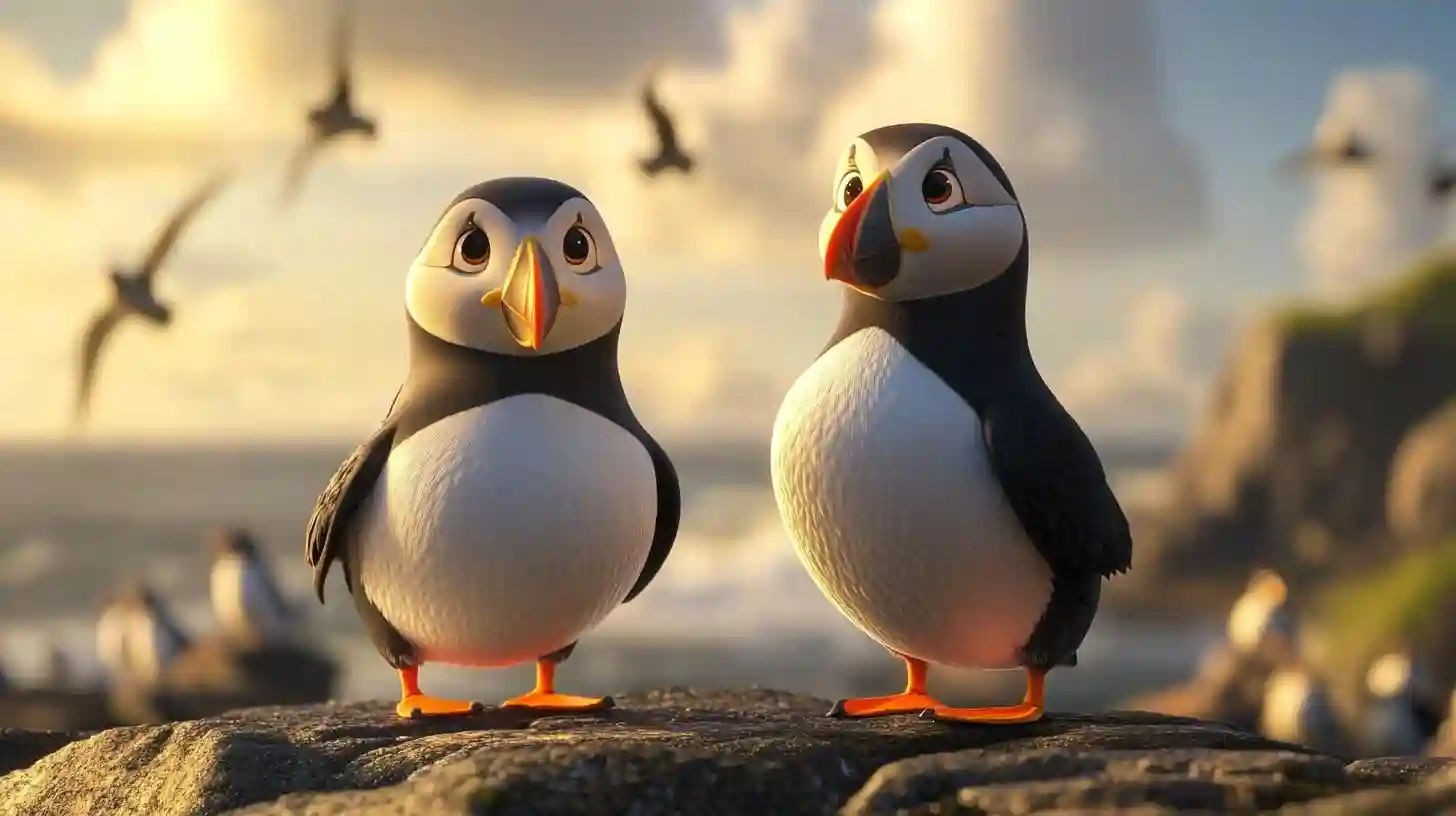
Puffins are often regarded as one of nature's most charming and endearing birds. With their distinctive, brightly colored beaks and plump, rounded bodies, they have an unmistakable cartoon-like appearance that captures the hearts of birdwatchers and casual observers alike. These seabirds belong to the family Alcidae and can be commonly found along the coasts of the North Atlantic, particularly in places like Iceland, Greenland, and parts of the British Isles. Their captivating appearance is only the surface of what makes puffins so intriguing.
Puffins are remarkable divers, adept at exploring the waters around their nesting sites. They rely heavily on fish for sustenance, employing unique hunting techniques that combine their swimming prowess with their striking physical attributes. Puffins use their wings for propulsion underwater, flapping them rapidly while simultaneously using their webbed feet for steering. This allows them to dive down to depths of up to sixty meters in search of fish like sand eels and mackerel. Observers who watch puffins diving can appreciate their agility and speed, as they dart gracefully through the water, showcasing their remarkable adaptations to an aquatic lifestyle.
The bright colors of puffins are most prominent during the breeding season, making them striking when perched on the rocky cliffs or nesting sites. Their beaks transform into vibrant hues of orange, yellow, and blue, adorned with intricate patterns that seem almost otherworldly. This colorful display plays a crucial role in attracting mates, as puffins engage in elaborate courtship behaviors to solidify their partnerships for the breeding season. Puffins are monogamous birds, often returning to the same partner year after year. Their loyalty and commitment are heartwarming, and their display of affection includes gentle nuzzling and synchronized movements that create a sense of intimacy.
Once puffins have established their breeding pairs, they return to their chosen nesting sites on rocky cliffs and offshore islands. These locations provide protection from predators and the harsh elements of the sea. Puffins typically dig burrows in the ground or often utilize existing cavities to lay their eggs. A single egg is laid each breeding season, and both parents share the responsibility of incubating and feeding the chick once it hatches. The bond between puffin parents is strong, characterized by teamwork and cooperation, and their commitment to the survival of their young is a testament to their natural instincts.
The life cycle of a puffin chick is filled with challenges and excitement. After hatching, the chick is entirely dependent on its parents for food and protection. Within weeks, it grows rapidly, gaining strength as it prepares for its first journey. The fledging process is a crucial turning point, where the young puffin must leave the safety of the nest and take to the open sea. Guided by instinct, the fledgling navigates the cliffs and learns to become an independent bird. This journey into adulthood is both perilous and exhilarating, showcasing the resilience and adaptability of these remarkable creatures.
Puffins are known for their playful behavior, often seen engaging in activities that seem to defy logic. Whether it’s sliding down grassy slopes or participating in spirited aerial displays, their antics bring joy and laughter to those lucky enough to encounter them in their natural habitat. This playfulness extends beyond their interactions with one another, as puffins are also known to be curious about their surroundings. They often investigate their environment and can be seen boldly approaching humans, intrigued by the presence of onlookers.
In terms of conservation, puffins face various challenges that threaten their populations. Climate change, overfishing, and habitat destruction are prominent factors impacting their survival. The warming oceans alter the availability of food sources, directly affecting puffin diets and breeding success. Conservation efforts are in place to protect these captivating birds and their habitats, highlighting the importance of awareness and action in safeguarding the natural world.
Puffins embody a unique blend of charm, resilience, and adaptability. From their brightly colored beaks to their playful antics, they resonate with the essence of whimsy and joy found in the natural world. The life of a puffin is a testament to the beauty of evolution and ecological balance, showcasing the intricacies of nature's design. Observing these charming birds in their natural habitat offers an unforgettable glimpse into a world filled with wonder and enchantment, reaffirming the importance of protecting such remarkable creatures for future generations.